Gufodotto would like you to read these:

Showing posts with label books. Show all posts

Friday, April 25, 2008

Microcosm is out!!!

So, if you really want to make me a present, well, you know my address don't you?

I'd be happy with an E. Coli plush toy, if you wish...


The author is touring the US, so if you happen to be close to one of his presentation, please go, as he's a really science writer. The best one around, I dare say.

Thursday, November 29, 2007

100 notable books from the NY Times

Too many to post them all in here.

So go and check them out there.

Monday, October 29, 2007

Evolution

Here is my new Xmas present:


Evolution, by Jean-Baptiste de Panafieu (Auteur), Patrick Gries (Auteur), Jean-Pierre Gasc (Préface). I was in a library in Liege and saw it cover, a snake skeleton, and had a look inside. It contains a huge amount of beautiful photos of different vertebrates skeletons, shot in black and white against a dark background. Just wonderful. It's 50EUR, but what the hell...

Wednesday, October 24, 2007

Not Alway Free market is the way to go...

At least, that's what the German government, publishers, retailers and consumers altogether say, defending a system threatened by the opening of discounting on german-language books in Switzerland. Until now, the price of a german book would have been the same whether you bought it in the shop down the road, online or... well I can't think of an alternative, but you get the idea.

This helped small sellers, and small publishers, to keep at bay big chains, fostering a wider, and arguably better, market.

What can I say? Good luck to the Germans. I will alway cheer on anybody who's pro-books.

Monday, September 10, 2007

New Books

Carl Zimmer let us know that he's just finished editing the concise edition of "The Descent of Man" by Charles Darwin. So, I went off to amazon to buy a copy together with "Fish with fingers, Whales with legs", and... "Pearls Before Swine: Blts Taste So Darn Good"...

Here's the proof:

Open Orders
Order Date: 8 Sep 2007
Order #: 202-4890542-7183528
Recipient: Luca A. Fenu
View or change order
Items not yet dispatched:
Delivery estimate: 28 Nov 2007 - 30 Nov 2007
  • 1 of: The Descent of Man
    Sold by: Amazon EU S.a.r.L.
  • 1 of: Pearls Before Swine: Blts Taste So Darn Good
    Sold by: Amazon EU S.a.r.L.
  • 1 of: At the Water's Edge: Fish with Fingers, Whales with Legs...
    Sold by: Amazon EU S.a.r.L.


The only prob is that I'll have to wait to get the others too, since Amazon does make you pay for delivery (differently from Play.com, where I usually buy my stuff). So the stuff will not come through before end of November!!!

Monday, August 27, 2007

The best science book of my year


I just finished this book, and I must say that I loved it. The sheer breadth and depth of arguments treated in the book is mindboggling. The authors cover from the birth of the universe, through that of our planet, to Evolution, our role in the cosmos (or lack thereof) and our best survival strategy in a universe which, if not downright evil, is at least very uninterested to our existence.

Mind opening in so many levels, it really is the very first 'science' novel.

I was a bit skeptic about the alternating structure at first, one chapter of novel followed by an explanatory chapter of science. Yet it does pick up and work wonderfully, giving you a light and varied yet interesting read. 10+!!!

(ps: I am looking forward to read the next one, now.

Tuesday, August 21, 2007

Narrativium rules!

I loved Good Omens, from Gaiman and Pratchett. The Discworld I could not bear, Pratchett's humour needs to be tempered by someone else hand, otherwise it's just too much.

RTight now I am reading "The Science of Discworld", and I'm too lazy to translate from Italian what I posted in a private forum: here it is. The final part is about Stardust, the gaiman-inspired movie which is getting very good reviews from both critics and audience.

Proprio ora sto leggendo "The science of Discworld", che e' parte racconto fantasy, con i maghi della Unseen University che creano x accidente il 'nostro' universo e ne osservano gli eventi, parte divulgazione con articoli di Ian Stewart e Jack Cohen (e Pratchett ovviamente) che trattano degli stessi argomenti in maniera leggera e molto originale. Son a meta' del primo e me lo sto godendo davvero, non vedo l'ora di attaccare il secondo e il terzo che ho comprato insieme.

riguardo Stardust, ecco un altro paio di reviews:

Da un sito amatoriale.

Dal sito di Sci-Fi Channel

NY Times

sembra OK.

su IMDB si e' beccato un gran bel 8.3.

here's the trailer:

(whenever youtube wakes up)

Saturday, August 04, 2007

A Bug's Death

Olivia Judson, evolutionary biologist at the university of Oxford and author of the wonderful Dr Tatiana Sex Advice to All Creation book, proposes to infect the malaria-carying mosquitoes with a killer gene, to estinguish the species within twenty generations or so.

After one night spent listening to two mosquitoes flying round my ears, I'm with Dr Tatiana. Who's with us?

Tuesday, July 17, 2007

I apologize

for not posting more.

I'm back from conferencing round Europe, but work is heavy, and free-time at home is spent mostly setting up pieces of furniture and stuff. The little left is for my lady. And sometimes to sleep before the next day.

I'm reading a nice book (The Swarm) during commute time, when I am not trying to catch up with my PK studies and such. It's about the sea inhabitants (whales, jellyfishes, even worms and bacteria) rioting and getting rid of humans. It reads heavy and documentary, at times, and characters are a tad stereotypical, but what the hell, it's a good read. Although after three hunded pages still we have no clue on what is going on and the plot is getting stuck. We know some alien intelligence lurks in the darkness at the bottom of the oceans, but we are not even hinted about their nature or the scope of their actions. It gets kind of boring after a while. Science Fiction fans want to understand the alien, most of all. Not to watch it while it smashes to pieces human civilisation.

Interesting stuff though, especially in the technical bits. I didn't know there was so much methane in the oceans, or that there were plans to extract it (how naive am I?). Nor about the complex ecosystems living off it.

Tuesday, June 19, 2007

Galaxy Dust


The stars like dust was one of Asimov's (worst) novel in the future history going from the robot's civilisations (I, Robot - The Naked Sun...) and the Foundation Cycle. In fact the Galactic Empire Cycle did suck, exception made for Pebble in The Sky (Paria dei Cieli), who told the story of a twentieth century man time-dislocated to this far-future where the galactic Empire is in full swing but planet Earth is barren with radioactive zones and only few survivors live in it as Pariahs.


But even Asimov could not imagine a dust made of... galaxies!!! The two big ones merging in front are quite known, although the name escapes me at the moment. Something like Tadpole's Galaxies.

- update: the one above being an artist rendering, and a crap one at that, I am posting below a real picture taken by Hubble:


click on it to get the full resolution: JPEG - 4.48 MB(2476 x 1669 pixels)

read more | digg story

Monday, June 18, 2007

42

I've listened to the whole of BBC's Hitch Hikers' Guide to the Galaxy, yesterday.

thenm, I went to look for it on the wikipedia. Well, not exactly like this but I ended up on the wikipedia page related to number 42.

quite a lot of unsuspected info, indeed. Makes you think that may be Adams had some insight after all.

t is a composite number; its factorization makes it the second sphenic number and also the second of the form {2.3.r}. As with all sphenic numbers of this form the aliquot sum is abundant by 12. 42 is also the second sphenic number to be bracketed by twin primes; 30 also rests between two primes. 42 has a 14 member aliquot sequence 42, 54, 66, 78, 90, 144, 259, 45, 33, 15, 9, 4, 3, 1, 0 and is itself part of the aliquot sequence commencing with the first sphenic number 30. Further, 42 is the 10th member of the 3-aliquot tree.

42 is the product of the first three terms of Sylvester's sequence; like the first four such numbers it is also a primary pseudoperfect number.

It is the sum of the totient function for the first eleven integers.

It is the third 15-gonal number.

It is a Catalan number.

It is a pronic number.

It is the twenty-eighth square-free integer.

It is the reciprocal of a Bernoulli number. It is conjectured to be the "third moment of the Riemann zeta function". That means that when

{1 \over T}\int_0^T \left| \zeta\left({1 \over 2} + it\right) \right|^6\,dt
is expanded as in powers of log(T), the leading coefficient—that of the 9th-degree term—is 42.

It is a meandric number and an open meandric number.

42 is a perfect score on the USA Math Olympiad (USAMO) and International Mathematical Olympiad (IMO).

In base 10, this number is a Harshad number and a self number, while it is a repdigit in base 4 (as 222).

The eight digits of pi beginning from 242,422 places after the decimal point are 42424242.

The first digit (4) taken to the power of the second digit (2) is equal to the second digit (2) taken to the power of the first digit (4): 42 = 24 = 16. It follows clearly that 24 exhibits the same characteristic, and in fact 24 is the only other two-digit non-repdigit number that does. (All two-digit repdigit numbers exhibit this characteristic.)


In Science

  • The atomic number of molybdenum. The element following molybdenum with atomic number 43 (technetium) has no stable isotopes.
  • The number of teeth wolves and dogs (canines) have.
  • 42° is the critical angle of refraction by water - it is the angle between a rainbow and the antisolar point.
  • The light leaving a rainbow is spread over a wide angle, with a maximum intensity around 42°
  • The number of minutes it would take a theoretical "gravity train" to travel to any point on earth.
  • In one Grand Unified Theory, the Georgi-Glashow model, the inverse of the coupling constant is approximately 42.
  • 10! (10 factorial) seconds is exactly 42 days.
  • On page 7-10 of Volume 1 of "The Feynmann Lectures on Physics" is a marginal figure that illustrates the strength ratio of gravitation attraction and electrical repulsion between two electrons as 1/4.17 x 10^42. The denominator is also written out by hand as a long, snaking 4,170,... followed by 39 more zeros. Feymann mentions the unified field theory, the similarity of the inverse square laws, the disparity of the relative strengths, and asks "Where could such a large number come from? ... it involves something deep in nature."

[edit] Astronomy

[edit] In Religion

  • The number of months the Beast will hold dominion over the Earth (Revelation 13:5).
  • The number (in the Babylonian Talmud, compiled 375 AD to 499 AD) of the "Forty-Two Lettered Name" ascribed to God. Rab (or Rabhs), a 3rd century source in the Talmud stated "The Forty-Two Lettered Name is entrusted only to him who is pious, meek, middle-aged, free from bad temper, sober, and not insistent on his rights". [Source: Talmud Kidduschin 71a, Translated by Rabbi Dr. I. Epstein]. Maimonides felt that the original Talmudic Forty-Two Lettered Name was perhaps composed of several combined divine names [Maimonides "Moreh"]. The apparently unpronouncable Tetragrammaton provides the backdrop from the Twelve-Lettered Name and the Forty-Two Lettered Name of the Talmud.
  • In the ancient Chinese text the Tao Te Ching by Lao Tsu, chapter 42 is an explanation of the universe.
  • The number of men of Beth-azmaveth in the census of men of Israel upon return from exile (Ezra 2:24).
  • The number of Jewish captive exiles who returned from Babylon is 42,360. This figure appears in two identical verses: Ezra 2:64 and Nehemiah 7:66. The number 360 is the number of days in the Jewish year, which further isolates the number 42,000. Perhaps the number 42,360 is both literal and symbolic similtaneously.
  • God sends bears to maul 42 of the youths who mock Elisha for his baldness (2 Kings 2:23).
  • There are 42 principles of Ma'at, the Ancient Egyptian personification of physical and moral law, order, and truth.
  • In the Kabbalah, the system of cosmology explained the significance of the various divine names and added other divine names. The most significant name is that of the En Sof (also known as "Ein Sof", "Infinite" or "Endless"), who is above the Sefirot (sometimes spelled "Sephirot"). The Forty-Two-Lettered Name contains four combined names which are spelled in Hebrew letters (spelled in letters = 42 letters), which is the name of Azilut (or "Atziluth" "Animation"). While there are obvious links between the Forty-Two Lettered Name of the Babylonian Talmud (see further up this page) and the Kabbalah's Forty-Two Lettered Name, they are probably not identical due to the Kabbalah's emphasis on numbers. The Kabbalah also contains a Forty-Five Lettered Name and a Seventy-Two Lettered Name.

Tuesday, June 12, 2007

Axis of Time


Just discovered this nice ucronic series:

Axis of Time by John Birmingham.

Back in 1980, Kirk Douglas starred in a light SF movie called The Final Countdown in which the USS Nimitz was flung back in time to World War II, where the crew encountered the forces of Imperial Japan, and the dilemma was whether it was wise change their own history. John Birmingham -- who has apparently never seen the movie -- has the same basic premise for this work, but that is where the similarities end.

well, if you want to know more just read the rest.

Monday, June 11, 2007

Friday, June 08, 2007

Ze books I am reading.

It's been a while since I have posted about which books I am reading.

Not much new, in fact, I haven't had the time to finish Dr Tatiana's (now a TV series!)yet, which is OK for casual reading since it's made of short letters. It usually makes my cess-pit-stops (can I say this on a blog?) more interesting.

And, to celebrate the start of my Mechelen-2-Turnhout daily commuting, I have started reading Stephen Baxter's Exultant. A book settled 28000 years in the future, in the Xeelee sequence as one of his fctitious universe is known. I previously read Timelike Infinity:

Set thousands of years in the future (5407AD), the human race has been conquered by the Qax, a truly alien turbulent-liquid form of life, who now rule over the few star systems of human space - adopting processes from human history to effectively oppress the resentful race. Humans have encountered a few other races, including the astoundingly advanced Xeelee, and been conquered once before - by the Squeem - but successfully recovered.

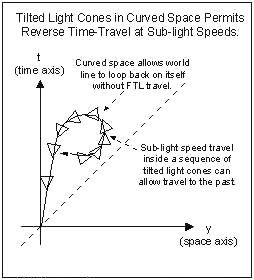
A human-built device, the Interface project, returns to the solar system after 1,500 years. The project, towed by the spaceship Cauchy, returns a wormhole gate, appearing to offer time travel due to the time 'difference' between the exits of the wormhole (relativistic time dilation), with one end having remained in the solar system and the other traveling at near lightspeed for a century. The Qax had destroyed the solar system gate, but a lashed-up human ship (a great chunk of soil including Stonehenge, crewed by a group called the Friends of Wigner) passes through the returning gate, traveling back to the unconquered humanity of 1,500 years ago.


I also read Ring, previously, where the Xeelee sequence kind of come to an end, at least in this universe. I did skip Flux, since, even if the premise of the book looks cool, with microscopic humans transcribed on a neutron star's surface used as weapon against the Xeelee Ring, it doesn't strike me as enough interesting to build a whole book out of it. May be I'll recover it later.

But let's get back to Exultant. Humankind has been at war with the all-powerful Xeelee, princes of the creation, for the past 25000 years, and the conquest of the galaxy has stalled all around the Galaxy core for some 3 thousand years or so. The part I've read until now is all about the struggle of few humans to find a new way to hit the Xeelee, exploiting a time-travel computing machine able to overcome the computing power which is apparently the Xeelee's single greatest advantage over humans. And here, in my humble opinion, start the problems. I can imagine a war lasting 28 thousand years. I can understand that the whole society gets restructured and forced by this prolonged state of war, as so many resources are devoted to destructive means and not to improving humankind's condition. Still, the world depicted by baxter seems to me grossly unrealistic - their technology seems to be pretty advanced, yet their fundamental science seems to be still stuck at our times. Also, I really can't believe that in 25 thousand years of FTL fighting, nobody else ever thought about the FTL-CPU. Mah... The lost technologies seems to be lost forever, as in the ability of humans of 20000 years before to create exotic matter and wormholes. It would be like us complaining that nobody today knows how to make a decent spearhead out of a piece of rock. For sure I don't right now, but if I needed one, I'd learn how to - in fact I know how hard is to get obsidian's arrowheads since I did try this when I was a teenager. The character in the book seems to be dumb, compared to today's humans.

Also, if the Xeelee are so powerful, how come that we managed to get hold of the whole galaxy, just with stolen technology? And how come that our competition hasn't spurred the Xeelee to improve their own technology? I really can't envisage a 3 thousand years long stalemate, not without at least an attempt to armistice. And if the xeelee really think of us as vermins, why on hell they didn't sterilise Earth before we took off to the stars? Mah...

Other than that, the book offer the usual assortment of nice characters, albeit stereotyped and not as well developed as those from, for example, Peter F Hamilton books, whos story doesn't push that far in the future, but certainly looks more realistic.

In general, I probably resent Baxter incredibly pessimistic view of aliens. I mean, I am no Star Trek fan, for sure, but really can't imagine that the Xeelee would not ask for other races help rather than trying to accomplish what they're up to on their own. And I really can't believe that an alien race would subjugate us just because they can, wiping out our ecosystem - I mean, one thing is to decimate human, this could also be OK. But if I were an alien, I would make sure that I kept as much as I can of Earth biology base intact, if nothing else 'cause some strange compound may turn out to be useful to me.


Even worst is the way humans treat their home planet. Ok that the Squeem, then the Qax made a mess out of it. Ok that most of their ancient knowledge has been lost, after thousand of years of occupation. But seriously, do you really think that we would drill down to the core of Earth to get Iron out of a deep gravity weel when so much of it is available for the grab in countless asteroids all around this system and other that we can easily accesswith our mighty spaceships? Please Stephen, be serious and check your economics.

All in all, I still like it enough to push until the end, hopefully it'll get better.

(edit: why is it so easy to review a book, and so hard to write my goddamn papers?)

Friday, May 25, 2007

A World Without America

No, I am not advocating anything political, here.

I did some thinking, yesterday. I read some time ago this short tale (forgot by whom - may be stephen baxter?) where Europe wasn't there. it got removed by aliens during the sixties, to avoid an incipient nuclear war between USA and URSS. It isn't quite alternative history, such as in the years of rice and salt - the focus is on how this sudden removal, unnoticed by humans who have had their memories modified ad hoc by the creatures, affects the culture - for example, to explain the fact that americans, australians and south africans speak the same language, a theory of confluence emerges whereby all languages are thought to tend toward a form similar to english, with time. It's a nice divertissement, good for a short story but I somehow doubt it would hold for a full novel - like Asimov's Nightfall, which did suck when extended (by Silverberg).

Anyway, another interesting tale is A World of Difference by Harry turtledove, the current master of alternate reality, where Mars is replaced by an earth-like planet (Minerva) and humans get there and find life.

but what if another big discovery of our past had never been done? What if Colombo had never come back, and there never was any America? How would have the world shaped up? What if instead than America, they had found a different continent, inhabited by a more advanced culture, able to withstand the Europeans' rough game? Or what if Europe itself had been discovered?

So, my question is? Do you know of any book telling such a story? if so, please drop me a line. Thank you.

and googling I found out this: http://www.alternatehistory.com/. check out their forum, where you can actually post your Alternative Timeline. For example, a longer lasting Roman Empire, owing to caesar not being assasinated. Or a present where Brits rule Space.

Thursday, May 24, 2007

Chimera, Grifon, Laelaps...

Which one is NOT a mythical creature?

Laelaps introduces us a really intelligent alternative to visiting the Creation Museum, some damn piece of crap put up by some pice of crap-ass creationist in the american untellectual junkyard.


So, you should rather go, Laelaps suggests, to the American Museum of Natural History's exhibition on Mythical Creatures, where fantasy is certainly better used than in thos bible stories - I think desert shepherd should have been just that, without attempting to compete with science fiction with their "Bible".

(I will admit though that I read the bible in comic version, where I was a child - it was given to me by a nun aunt, and I didn't know better. drawings were ok, too, although I found the stories strangely anticlimatics. Also, I believe the Apocalyps wasn't include. The only decent part, probably. Pity.

Luckily, I have the Gaiman and Pratchett version of it.

Tuesday, May 15, 2007

Yeay, that's what I am talking about...

Coturnix has a nice post about a favourite childhood book series of his, but most specifically on the pyramidal scheme of information dissemination used by the three detective boys in the books to gather information. Every boy would phone up to five friends, and they would answer the question or in turn phone five more, and so on.

This comes just right with my discovery of Yahoo Answers, which sucks when you want some scientific knowledge but rocks when, like this morning, you want to know what kind of shirt color I can match to a brown suite and black shoes and belts.

For Science, seed is much better, as are many other places.

Pyramid schemes are a very efficient method of disseminating information, although they came at the price of disseminating it to a majority of people who most certainly do not know the answer asked for.

In the book that I am reading, "The wisdom of the crowds", the same thing is pointed out for decision making: although aggregating individual decision in a collective one is a very good way of finding the right solution to a problem, in practical terms this isn't always possible. It's often better if the decision is left to a group of 'expert' at the condition that they be diverse enough, and they do not influence each other by being aware of the decisions made by others at different times (a phenomenon known as 'cascade').

That's the limit of what's called partecipative democracy, i.e. a political system where every decision is taken through a vote by the citizens. The parliamentary alternative is not necessarily better, and if the theory underlying the book is correct, it would be better for us to randomly select our representatives than to elect them. this way, we'd get a better cut of the population. Now, I am not one hundrd per cent sure but I believe this is how it happened in at least one country of the past, where the member of the "senate" were drawn and had the civic duty of leaving their jobs (I believe with compensation for it). Much like the juries system in the US. May be it was Athens? I don't remember.

Anyway, all this seems to be ticking together, I really love when I find myself involved in such synchronicities.

Tuesday, May 08, 2007

Filling up my sci-fi bag

I am buying these books. That is, I will if the server at play.com stops hitching up.

The Time Ships - Stephen Baxter

Exultant - Stephen Baxter

The Swarm - Frank Schatzing

Enjoy your evening!

Thursday, April 19, 2007

Is Justin Timberlake a Product of Cumulative Advantage?


No, I haven't gone POP (or whatever style this timberland sings into).

I just want to point out for you this very interesting piece about sociology and the study of human behaviour, particularly of phenomenon such as fads, or the success of a rock band, or movie, and such.

Why do the experts in the field, e.g. movie producers and such, get it wrong so often? Why so many flops get financing, and so many future hits struggle to even get published? The answer, it seems, is in random choices and most people being sheeps. That is, following the herd.

the author, DUNCAN J. WATTS, is also the author of a book covering the same and many more example on similar subjects. Six Degrees: The Science of a Connected Age

Wednesday, April 18, 2007

Dinosaurs!!! Yeay!!!


Dinobase has been launched, Sarda reports from Bristol!!!

I love dinosaurs. So I'll be definitely having a look.

And in a seemingly related subject, I have been looking for a good introductory book about the angiosperms' evolution, and more in general plants' evolution, but haven't found one yet.

Also, a book extensively detailing past climates of the Earth would be wellcome. Or both in one, a sort of Annals of Natural History of Planet Earth. Passers-by, any suggestions?